Today we saw a case of a patient with renal transplant who developed CMV esophagitis and also has a newly diagnosed high grade B-cell neoplasm in need of chemotherapy.
This raised a number of questions which I have attempted to answer with the associated references.
1) How do we manage this patient?
2) When can we safely provide cancer treatment?
3) Why did this happen?
The American Journal of Transplantation has a set of guidelines which has recently been updated. The guidelines for CMV prevention and treatment are available here. These guidelines are similar, but in the bone marrow transplant population.
This article looks at risk factors in renal transplantation for developing CMV disease.
This article addresses what happens to patients with pre-existing CMV disease (or recently treated) who go on to SCTx.
Finally, this article describes/summarizes post transplant lymphoproliferative disorder (PTLD) which this patient's lymphoma likely is related to.
Wednesday, January 27, 2010

Tuesday, January 26, 2010
Choramnionitis with Beta-Hemolytic Strep Bacteremia
Today we discussed a case of presumed choramnionitis with beta-hemolytic strep bacteremia. I have previously blogged about GBS here and peripartum GAS infection here.
This article, while basic, is a reasonable review of the role on parenteral antibiotics in peripartum women with fever. I would probably choose slightly different antibiotics if giving more than one/two doses. This article discusses the differential diagnosis of peripartum fever.
This cochrane meta-analysis questions the practice of peripartum prophylaxis in known GBS patients... I'm still convinced it is a good idea.
This article, while basic, is a reasonable review of the role on parenteral antibiotics in peripartum women with fever. I would probably choose slightly different antibiotics if giving more than one/two doses. This article discusses the differential diagnosis of peripartum fever.
This cochrane meta-analysis questions the practice of peripartum prophylaxis in known GBS patients... I'm still convinced it is a good idea.
Monday, January 25, 2010
Varicella Pneumonia
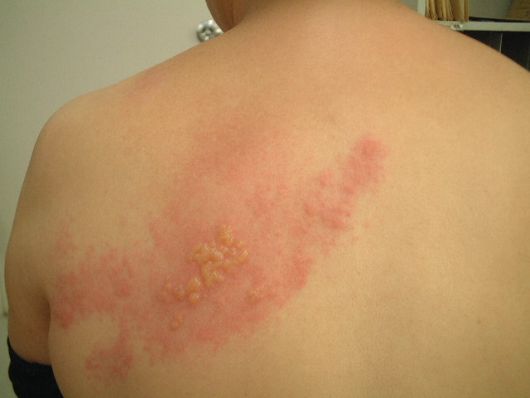 Today we saw a case of disseminated varicella with associated varicella pneumonia / pneumonitis. This was in the context of a primary infection in an adult patient.
This is a review of varicella pneumonitis, and a link to an article discussing the contraversial role of corticosteroids in its treatment.
Varicella can also cause a number of end organ specific syndromes including:
- myopericarditis
- retinitis
- meningitis and meningoencephalitis.
- transverse myelitis
- pancreatitis
- hepatitis
- Ramsey Hunt Syndrome (? role for treatment with antivirals)
- Role for caution with steroids in the absence of antivirals for proven RHS?
- Role for caution with steroids in the absence of antivirals for proven RHS?
There are guidelines of management and a good review of various syndromes published here.
Previous related blogs are here and here.
Thursday, January 21, 2010
Clostridium difficile smorgasboard

See previous blogs here.
And now for a smattering of interesting C. difficile associated publications since the last time I posted on this topic...
- An entire issue of the journal Anaerobe dedicated to C. difficile related issues is available here.
Notable articles in this journal include:- reviews of diagnostic testing
- probiotics (lack of efficacy in prevention and treatment according to the authors)
- fecal transplant (suggests that it does indeed work -- even if gross)
- the 'rixamixin chaser' (shows promise in multiple relapses, but not the magic bullet
- The potential role of an antitoxin (NEJM here)
- The development of disease in patients status post collectomy!
- The perils and difficulties of diagnosis.
- EIA sensitivity is relatively poor - ~60-70%
- GDH has better sensitivity, but poor specificity
- Cytotoxic assays are time consuming and expensive
- PCR may be less effort dependent but has an upfront cost
- An algorithm suggested is GDH as a screen, if positive confirm with EIA, if negative EIA do PCR or cytotoxic assay.
- A set of european guidelines, which seem quite reasonable.
- An article on the challenges of treating patients in the ICU including:
- lack of sensitivity of testing means potential undertreating of critically ill patients
- the role of vancomycin in severe disease
- the absence of diarrhea (as also reported from Toronto) in up to 20% of critically ill patients because of illeus, post-operative status, or narcotics
Wednesday, January 20, 2010
Candida Endopthalmitis
We've talked about candidemia before...
One of the complications of candidemia is the development of endogenous endopthalmitis. Different rates of occular involvement are quoted from 2%-40% depending on case series.
The majority of patients will develop endopthamitis within 2 weeks of candidemia. Particularly if there is a delay in treatment of the candidemia or if the candidemia is protracted.
One of the complications of candidemia is the development of endogenous endopthalmitis. Different rates of occular involvement are quoted from 2%-40% depending on case series.
The majority of patients will develop endopthamitis within 2 weeks of candidemia. Particularly if there is a delay in treatment of the candidemia or if the candidemia is protracted.
Early retinal exam can diagnosis, but follow up at 2 weeks is prudent as early lesions can be missed.
Treatment is covered in the IDSA guidelines (previously cited). Azole agents can be used for succeptible isolates. If there is a significant vitritis, sometimes vitrectomy with intraoccular amphotericin is required in addition to systemic therapy.
There are a number of good reviews here (treatment), here (case report and review of condition), here (BMJ review) and here (retinal lesions in sepsis, including description of occular manifestations).
Treatment is covered in the IDSA guidelines (previously cited). Azole agents can be used for succeptible isolates. If there is a significant vitritis, sometimes vitrectomy with intraoccular amphotericin is required in addition to systemic therapy.
There are a number of good reviews here (treatment), here (case report and review of condition), here (BMJ review) and here (retinal lesions in sepsis, including description of occular manifestations).
Tuesday, January 19, 2010
Klebsiella pneumoniae carbepenemase
We've talked a lot about this one -- but fortunately have yet to see one.
Some useful reviews/information:
Some useful reviews/information:
Monday, January 18, 2010
Cryoglobulinemia related to HCV
This weekend we saw a case of presumed cryoglobulemic vasculitis in a patient with known HCV. There is a previous blog related to HCV here, including a good link to a review on cryoglobulinemia. The following figure on causes of cryoglobulenemia is taken from said review:

Another review, particularly related to HCV is available here. In patients with HCV associated cryoglobulinemia, treatment of the HCV may be helpful in getting the condition under control.

Another review, particularly related to HCV is available here. In patients with HCV associated cryoglobulinemia, treatment of the HCV may be helpful in getting the condition under control.
Subscribe to:
Posts (Atom)